The Couple's Dance
Act 1: The dance of delicate balance
Up until now, we’ve assumed that a population just keeps growing until it slams into the carrying capacity () and stops. But nature isn't usually that static.
To be clear, we are not simply talking about a crowded room where each new unit consumes a resource, leaving less available for the next unit. That is just standard logistic growth approaching a fixed limit ([2], [3]). No, in reality, the act of consumption alters the regeneration rate of the resource itself.
Think of it like an industrial city: a population doesn’t just drink from the local river; its factories pollute the water. By merely existing and consuming, the population actively decreases the total amount of life that the environment can support. The baseline regeneration rate—the very mechanism that defined in the first place—is compromised.
Why does this matter? Because it means a population () doesn't just compete for a fixed resource; its existence fundamentally changes the value of . The "wall" isn't a static brick barrier; it is moving.
And what do you think happens then? ([4])
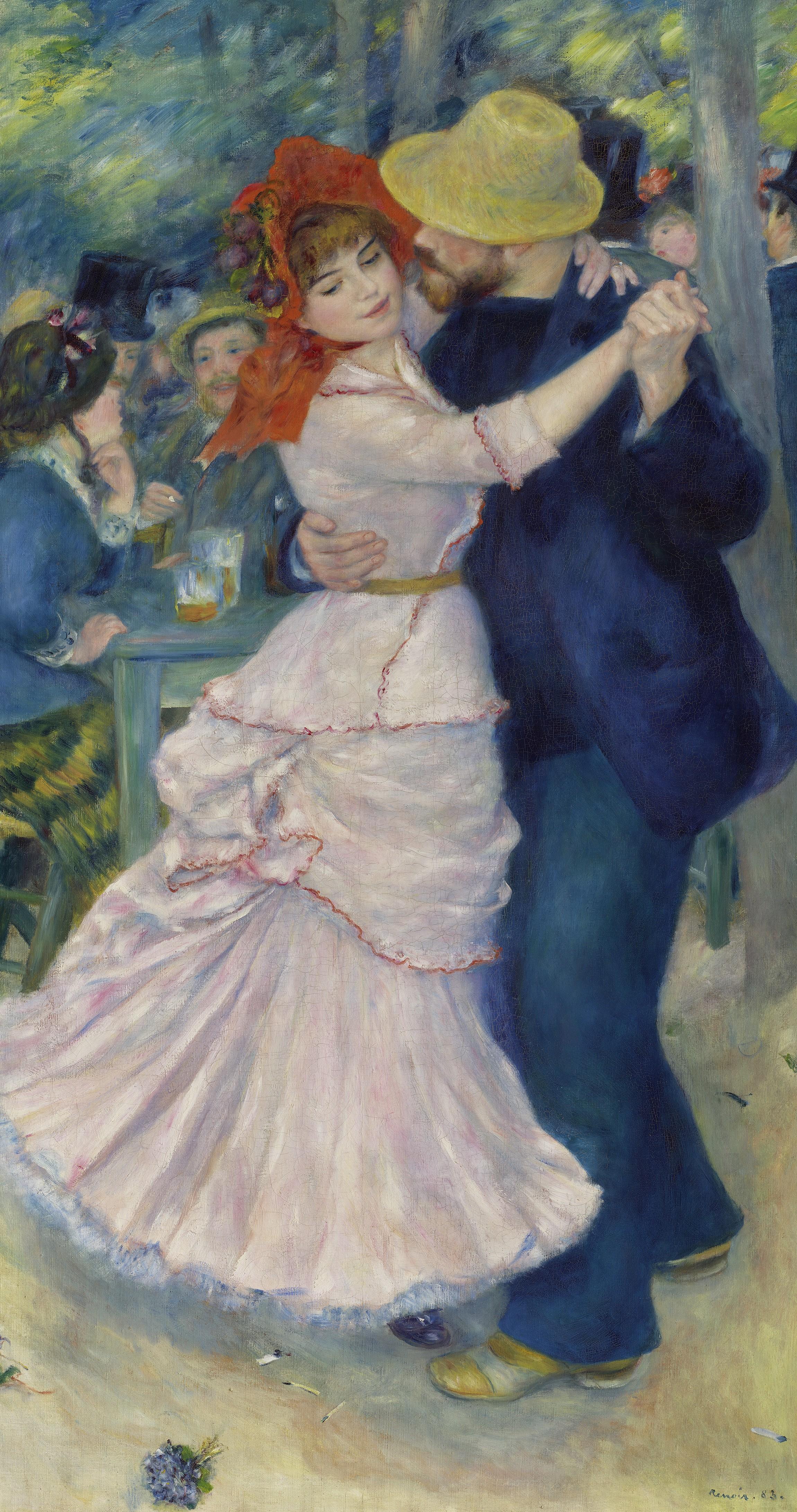
That brings us to the concept of the couple-dance.
Source: Wikimedia Commons (Public Domain)
I am not a dancer, but I have seen enough to know that an elegant dance relies on a delicate balance of continuous feedback between a leader and a follower. When the system is in sync, the two are locked in a beautiful, fluid motion. Our ecological dance between a population's action and a resource's availability is just as delicate.
In the real world, it is rarely just one population either ([1]). We are dealing with a dynamic set of populations, let's call it , and they are all dancing in a fragile balance with a set of resources, . Mathematically, this creates a highly complex State-Space.
(Hold on to that term (State-Space) for a bit. We will explain it shortly, but please just take the hit for this moment and read on).
It is a rather harsh proposition to jump directly into such a massive, multi-variable set of circumstances to build our mathematics. So, let's step back and see what happens when we strip the system down to just three things:
-
Abundant Grass (): We will assume there is an unlimited amount of grass (I don't think this is true anywhere, but let's just humor ourselves for this theoretical world).
-
The Rabbits (): Their resource is the grass, meaning they have an unlimited food supply.
-
The Wolves (): Their resource is the rabbit population.
The wolves can experience an era of abundant resources too—right up until the moment they overhunt. If the wolves suddenly eat all the rabbits before the rabbits have time to reproduce, the rabbit population crashes. Consequently, all the wolves will starve and die shortly after, regardless of how much beautiful, unlimited grass is still sitting right there on the ground.
See? Even this highly simplified theoretical world is packed with enough chaotic possibilities to ponder over ([1], [4]). Why tax our brains with the real world when the simple one is already this complicated, right?
Act 2: The Fishy Business of War and Mathematics
Let’s look at a real-world example where this delicate dance got severely interrupted. Enter World War I. For about four years, humans basically stopped commercial fishing in the Adriatic Sea because, well, they were busy shooting at each other instead.
An Italian marine biologist named Umberto D'Ancona looked at the fish market data after the war ended ([5]). Common sense says: no humans catching fish = a massive boom in the population of regular prey fish (like sardines).
But nature doesn't have to comply with what we think. It would be great if it did, wouldn't it? Think about it—personally, I believe nature should not bend to our expectations. Anyway, that is a completely different topic.
D'Ancona found a paradox. The prey fish populations were more or less the same, but the population of predatory fish—the sharks and rays—had completely exploded. Why? Because by stopping our fishing, we didn't just save the prey; we gave the predators an uninterrupted, all-you-can-eat buffet.
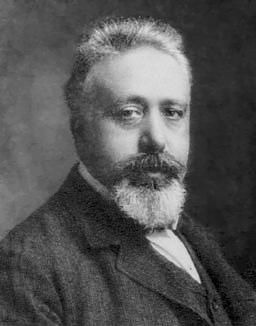
D'Ancona was stumped, so he did what any good biologist does when the numbers get weird: he brought the problem to a mathematician. Specifically, he consulted his father-in-law, Vito Volterra ([5]).
Source: Wikimedia Commons (Public Domain)
Vito Volterra was an Italian mathematician and physicist who served as professor in Turin and then in Rome ([5]). He was one of only 12 out of 1,250 professors who refused to comply with Italy's fascist regime in 1931.
Act 3: Across the ocean: chemical reaction dance
Meanwhile, across the ocean, an American chemist named Alfred J. Lotka (Ukrainian immigrant to America) was independently figuring out the exact same mathematics for chemical reactions ([5]). We call it the Lotka-Volterra model today, so they both get to share the credit.
Coming back to Italy again, Volterra realized that you can't model the fish population phenomenon with just one equation.
Remember our carrying capacity, ? For the predatory sharks in the Adriatic Sea, their wasn't a static pile of resources; their was the population of the prey fish. When your carrying capacity is a living, breeding, dying organism, the "wall" is no longer a fixed boundary. The wall is moving. It escapes, it reproduces, and it collapses.
Because the limit itself is dynamic, you cannot solve the system with Verhulst's single logistic curve ([2]). Just as the grass depends on the rabbits, the rabbits depend on the wolves.
You need two equations, and they need to be wired together.
Let's bring back our theoretical world from Act 1:
= Population of Prey (our Rabbits, or Sardines) = Population of Predators (our Wolves, or Sharks)
Here is how Volterra wrote the rules of the dance:
The Prey Equation (The Hunted):
Let's break this down:
- The Good (): If there are no wolves around, the rabbits just eat that unlimited grass and multiply exponentially. is just their natural growth rate.
- The Bad (): This is the death rate. Notice it requires both and to be multiplied together. Why? Because a wolf can only eat a rabbit if they actually bump into each other in the forest. It's a collision rate. is just how lethal that collision is (the hunting efficiency).
The Predator Equation (The Hunter):
And for the wolves:
- The Good (): Wolves don't grow from eating grass; they grow from those exact same collisions with rabbits. is how efficiently a wolf turns a dead rabbit into a new baby wolf.
- The Bad (): If there are zero rabbits (), the first part of the equation vanishes. The wolves are left with just . This means they simply starve and die off at a natural decay rate of .
When you wire these two equations together, the math perfectly maps out that elegant, terrifying couple-dance we talked about. The rabbits boom, which causes the wolves to boom, which causes the rabbits to crash, which causes the wolves to starve, which gives the rabbits space to boom again. A perpetual sine wave of life and death.
[The Predator-Prey Oscillator]
Act 4: Killing the Clock (The Conservation of Life)
In engineering, when we encounter a chaotic, coupled system, the first instinct is to try and kill the clock. If we can mathematically remove "Time" () from the equations entirely, we can stop watching the system frantically vibrate and instead uncover its hidden, underlying geometry. We want to see how the predator population changes strictly relative to the prey population. Let us bring back Volterra's coupled equations ([5]).
To make the calculus cleaner, let represent the Prey and represent the Predators.
Step 1: The Chain Rule Trick
To eliminate time (), we apply the chain rule by dividing the rate of predator change by the rate of prey change (). This yields a single differential equation of predators relative to prey ().
Step 2: Separation of Variables
Now we have a time-independent equation. We can rearrange the terms algebraically to get all the variables on the left side and all the variables on the right.
We can split the fractions to prepare them for integration:
Step 3: Integration and the "Energy" Constant
We integrate both sides. The integral of is the natural logarithm ().
Finally, let us group all our variables on one side to isolate (the constant of integration).
Equation (17)—the Ecological Pendulum—is the masterpiece of the Lotka-Volterra model ([5]). Think about a physical pendulum. As it swings back and forth, it constantly trades kinetic energy (speed) for potential energy (height). However, if you add those two energies together, the total energy of the system () remains perfectly constant. This equation proves mathematically that biological populations do the exact same thing ([4]). As the wolves eat the rabbits, and the rabbits starve the wolves, they are constantly trading populations back and forth. But through all that chaotic booming and busting, this bizarre mathematical quantity—the "Energy" of the ecosystem—never changes. Because is a conserved constant, if you plot this equation on a graph, the line cannot shoot off to infinity. It is mathematically trapped. It draws a perfectly closed, inescapable loop.
Act 5: Finale - Interactive Exploration: The Live Manifold
It is one thing to read about a conserved mathematical loop; it is another to watch it warp in real-time. Below is the Phase Portrait. We have removed time from the X-axis. You are now looking purely at Prey () versus Predators (). Grab the sliders to change the hunting efficiency or the birth rates. You will instantly see the mathematical "energy" contour stretch and distort, but it will always remain a closed loop.
[Phase Portrait: Live Manifold Distortion]
Reflection Question: What happens to the orbit when you drastically increase the hunting efficiency ()? Does the loop get tighter and safer, or does it swing dangerously close to the zero-axis (extinction)? ([5])
[Diagnostic Check: Coupled Dynamics]
References
- Malthus, T. R. (1798). An Essay on the Principle of Population - The foundational text on population dynamics and resource scarcity. Available via Internet Archive.
- Verhulst, P.-F. (1845). Recherches mathématiques sur la loi d'accroissement de la population - Original derivation of the logistic equation. Nouveaux Mémoires de l'Académie Royale des Sciences et Belles-Lettres de Bruxelles.
- Wikipedia: Logistic function - Overview of the logistic curve and its applications in biology, demography, and epidemiology.
- Gotelli, N. J. (2001). A Primer of Ecology (3rd ed.) - Comprehensive treatment of carrying capacity and density-dependent population regulation in ecological systems. Includes detailed analysis of predator-prey dynamics and conservation laws in ecology.
- Volterra, V. (1926). Fluctuations in the abundance of a species considered mathematically. Nature, 118(2972), 558–560. & Lotka, A. J. (1925). Elements of Physical Biology - The foundational papers establishing the Lotka-Volterra model. Historical context: Umberto D'Ancona's observation of the Adriatic fish population paradox during World War I led to his collaboration with mathematician Vito Volterra, who independently developed the coupled differential equations. Alfred Lotka derived the same mathematics from chemical reaction kinetics, creating one of ecology's most important theoretical frameworks.